About the Author: Michael
With over a decade of servicing residential and commercial hardware across Staten Island, I have extracted thousands of snapped keys from neglected lock cylinders. The coastal environment here requires highly specific preventative maintenance.
A high-quality Schlage or Medeco deadbolt is an engineered piece of machinery containing microscopic brass pins and springs. Yet, homeowners treat them like indestructible blocks of steel, entirely ignoring them until the key snaps in half.
Staten Island's unique climate-the humid summers, the freezing winters, and the corrosive salt air rolling off the Raritan Bay-accelerates metal oxidation. A lock that requires you to jiggle the key or throw your shoulder against the door to turn the thumbturn is actively failing. Here is the definitive, expert guide to maintaining your locks.
1. The Great WD-40 Myth
Let me state this unequivocally: Never spray standard WD-40 inside a keyhole.
WD-40 is a Water Displacement solvent, not a long-term lubricant. If your lock is sticky, spraying WD-40 will make it feel buttery smooth-for about two weeks. The liquid petroleum base acts as a magnet for dust, dirt, and microscopic metal shavings. Eventually, it coagulates into a thick, black sludge that cements the pins in place, utterly destroying the cylinder. I have to completely dismantle and soak these sludge-filled locks in degreaser to save them.
2. Proper Lubrication: Graphite vs. PTFE
If standard oil-based lubricants are banned, what should you use?
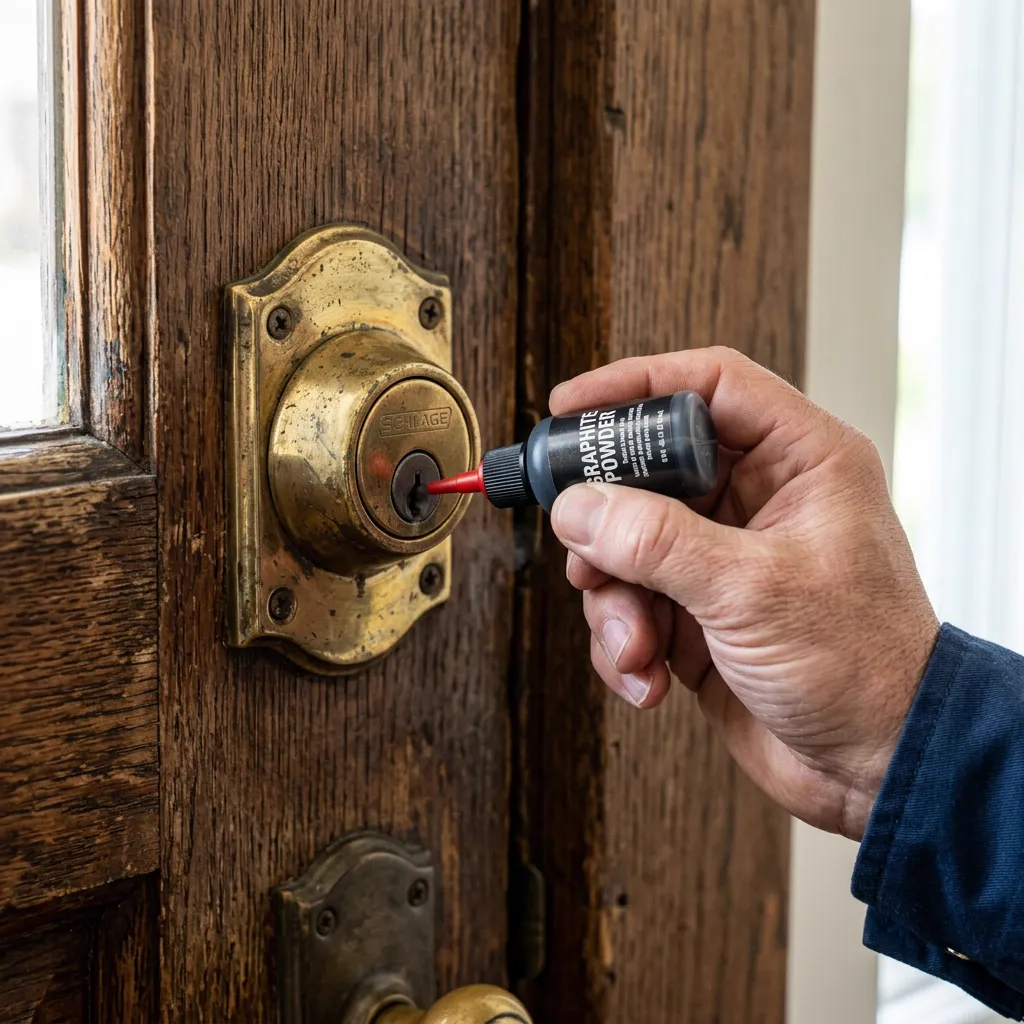
- Dry Graphite Powder: This is the traditional locksmith's choice. It is a dry, carbon-based powder that lubricates brass pins without attracting dust. Squeeze a tiny puff into the keyhole, insert your key, and pull it in and out a dozen times to distribute the powder. (Warning: It is extremely messy and can stain white doors).
- PTFE (Teflon) Dry Lube: This is the modern, superior alternative. Sprays like Houdini Lock Lube or WD-40 *Specialist Dry Lube* (specifically the dry PTFE version) go in wet to penetrate deep into the pins, but the carrier solvent quickly evaporates, leaving behind a slick, dry Teflon coating that repels dirt and resists freezing.
3. Addressing Structural Binding (The Shoulder Shove)
If your key turns smoothly when the door is wide open, but you have to pull the handle or shove the door with your hip to lock it when closed, the lock cylinder is fine. The problem is structural binding.
Wooden doors swell in the humid Staten Island summers and contract in the winter. This causes the door to sag, throwing the deadbolt out of alignment with the metal strike plate on the door frame.
When you force the key to turn a binding deadbolt, you are applying massive shear force to a fragile piece of brass. The key will snap. To fix this:
1. Check the top hinge. The screws often strip out of the soft pine frame. Replace the standard 3/4-inch hinge screws with 3-inch deck screws to pull the door back into alignment.
2. If it still binds, use a metal file to grind away the edge of the strike plate where the bolt is rubbing. The deadbolt must glide into the hole with absolutely zero friction.
4. Winterizing Your Exterior Locks
When temperatures drop below freezing, condensation inside an unlubricated lock cylinder can literally freeze the pins in place.
If your lock is frozen, do not hold a lighter to your key and insert it-this melts the plastic components inside modern cylinders. Instead, use a specialized lock de-icer spray containing isopropyl alcohol to melt the ice instantly, followed immediately by a PTFE dry lubricant to displace the moisture and prevent refreezing.
5. Key Maintenance and Rotation
Keys are cut from brass or nickel-silver. Over years of use, the sharp peaks (called the "bitting") wear down and become rounded.
When a key wears down, it no longer lifts the pins to the exact shear line, causing you to have to jiggle the key to open the door. Never copy a worn-out key; the machine will simply create a fresh copy of the rounded, flawed shape. Instead, ask a locksmith to cut a new key "to code" (using the factory mathematical measurements) or copy an unused original spare.
The Coastal Hardware Upgrade
If you live in South Beach, Midland Beach, or Tottenville, the salt air will pit and corrode standard clear-coated brass within two years. When upgrading your locks, specifically request Marine-Grade PVD (Physical Vapor Deposition) finishes or solid Stainless Steel (Grade 304 or 316). They cost significantly more upfront but will outlast standard hardware by decades in coastal environments.
Performing this 5-minute maintenance routine once a year in November will save you the cost and immense frustration of a midnight lockout due to a snapped key. If your lock is already beyond saving, contact a professional to replace the cylinder before it fails completely.